
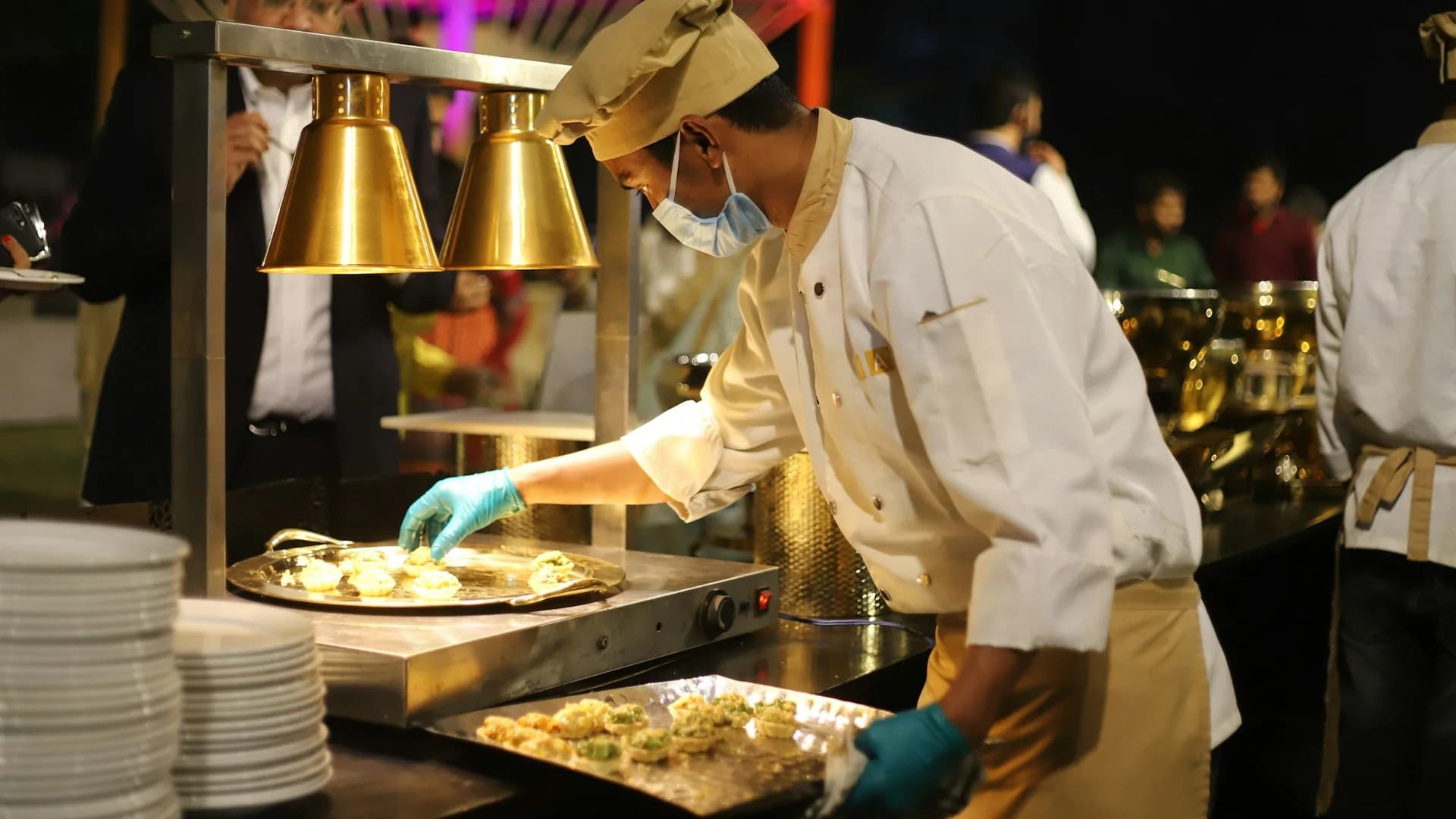
Help people choose, plan, reserve, and show up.
A digital experience with the same clarity as great hospitality
Brand, discovery, booking, event, menu, and guest communication experiences for restaurants, venues, nightlife, and entertainment concepts.
Challenge and opportunity
What usually gets in the way
Brand, discovery, booking, event, menu, and guest communication experiences for restaurants, venues, nightlife, and entertainment concepts.
- Hours, menus, events, and availability drift across channels
- Reservation paths break on mobile
- Group and event inquiries lack useful context
- The brand atmosphere does not translate online
What the customer expects
Current hours, prices, and availability

Recommended digital system
Features we recommend
We translate those expectations into practical features and integrations for Restaurants & Entertainment. The architecture connects user experience, content, automation, data, and internal systems to reduce manual work and create one consistent journey from discovery through service delivery.
- Mobile-first menu and event discovery
- Reservation, waitlist, or ticket flow
- Group and private-event qualification
- Location, access, dress, and policy context
- Guest CRM and consent-aware communication
Integrations that help
- Reservations and ticketing
- POS and menus
- Maps and review profiles
- CRM, email, and messaging
- Analytics and campaign tools
The customer journey we design for
Choose
See the atmosphere, offering, location, and fit for the occasion.
Plan
Confirm hours, menu, event details, access, and policies.
Reserve
Book, join, buy, or inquire with immediate next-step clarity.
Return
Receive useful updates and relevant future invitations.
Services that fit
Brand Strategy
Make the business easier to understand, choose, and remember.
Explore serviceBrand Identity
A flexible visual system, not just a logo file.
Explore serviceWeb Design
Turn a complex offer into a clear next step.
Explore serviceBooking Systems
Connect availability, payment, confirmation, and operations.
Explore serviceCRM Integrations
Keep customer context connected from first touch to follow-up.
Explore serviceLocal SEO
Help nearby customers find the right location or service.
Explore serviceInformed decisions
Questions from this industry
Practical answers for Restaurants & Entertainment teams evaluating a new digital experience, modernizing existing systems, or deciding what to improve first. Every recommendation considers the customer, the operation, the data, and the team’s real ability to maintain the change.
- Clear priorities
- Connected systems
- Measurable outcomes
4 answers
Restaurants & EntertainmentCan staff update menus, hours, and events without a developer?
Yes, when those items are modeled as structured content with appropriate permissions. The editing workflow should include effective dates, previews, and clear ownership so old prices or event details do not remain public accidentally.
How should a Restaurants & Entertainment organization prioritize digital improvements?
We begin with evidence rather than a feature list. A recurring challenge such as “Hours, menus, events, and availability drift across channels” is weighed against its effect on customers, revenue, operational workload, and risk. Capabilities such as “Mobile-first menu and event discovery” are then sequenced by dependency, effort, and provable value. This gives the first release an important problem to solve while creating a useful foundation for later improvements.
Can the new experience work with our existing platforms and systems?
Often, but every connection must be verified before it is promised. We review account ownership, permissions, data quality, APIs, limits, security, and failure recovery. For Restaurants & Entertainment, likely connection points such as Reservations and ticketing and POS and menus are evaluated against the real workflow. We retain tools that perform their job well and replace only what creates friction, risk, or duplicated work.
How do you connect marketing, conversion, and service delivery?
We design one measurable journey connecting Choose with Return. Content, calls to action, forms, automation, and follow-up share context so customers do not have to start again in every channel. Ownership and exception paths are also defined so the public experience matches what the team can reliably deliver.
Does your situation need a more specific answer?
Tell us what is slowing down your Restaurants & Entertainment organization. We can help turn open questions into a clear scope, defensible priorities, and realistic next steps.
Let’s build what your business needs next.
Tell us where your business is today, what you want to improve, and what success should look like.